
Supporting Israeli Lives in Crisis: The Impact of Our Emergency Action Fund
October 7, 2025
Rabbi Greenberg’s Yom Kippur Sermon from October 2nd, 2025
October 16, 2025
Building a Sukkat Shlomecha: Peace Comes from Those You Least Expect
In college, I served as Vice President on the student board of our university’s Hillel organization. We were cleaning out the library of our Hillel, sorting old books, worn with age and tender use into piles of books we wanted to keep and piles of books we wanted to donate. As I was sorting through, I remember thinking how beautiful it is to be part of a culture that places such emphasis on passing down ideas, thoughts, recipes, and advice through books. Any books that were unable to be donated, in the case of them being too worn or missing pages or were rejected by libraries, yet had G-d’s name in them, were set aside to be buried, as is the custom for texts with G-d’s name out of respect.
The President of Hillel and I had come by one day to pick up the box of books to be buried…but we found the box was gone. We were told that all these old texts that had been preserved for so long before this, that people in our collective story have fought for – and died for – to read, had been thrown out. The President and I decided we would quietly go out to the dumpster and find the books and save them for our original plan, to bury them out of respect, not just out of respect for the books because they contained the name of G-d, but out of respect for the Jews before us.
Going through the trash and rescuing these books, I felt my connection to Judaism more strongly than I had ever felt it. I realized my love and respect for my people and for our traditions was greater than I knew. What really made me feel most connected to my Judaism, more than going through and saving the books was the unlikely act of kindness we experienced while doing it.
There was a student who often came to Hillel who seemed to have pushed everyone away. He denounced most Jewish customs and traditions, from being the only one not bending and bowing during Shabbat services to criticizing other Hillel members who believed in G-d. He was alone a lot, and understandably so, with the way he treated people.
This student, who usually kept to himself, yet was always at our Hillel building, saw and heard what the president and I were doing. To my utter confusion and amazement, and with a quiet solidarity, he brought a chair out to reach the dumpster, along with an extra box, and this student who had once called me ridiculous and a sheep for believing in G-d helped us fish out prayer books covered in food and garbage. We never spoke of this moment of solidarity again, but it was clear he was helping us despite what he believed because he saw how important it was to us. In that moment, I felt particularly connected to my Jewishness, seeing how someone with completely different views than me would still come to my aid.
I often think of this story when I think of the divide our people are experiencing. Too often, we shut each other out when we disagree, rather than standing in solidarity as a Jewish people. This week marks the second anniversary since over a thousand people were wounded, killed, and taken hostage on October 7th, 2023. Since then, the Jewish people have unfortunately been divided about what is worth fighting for, who should be remembered, and where we should stand. I believe that we have an obligation to remember the hostages and advocate for their safe return home.
I believe that it is essential we support our friends and family who are fighting for their safety and right to live in peace. I believe that it is our duty to be responsible and mindful of the information we take in and the information we spread. This week also marks the holiday of Sukkot, a time of celebration and thanksgiving, commemorating the gift of God’s protection and shelter while leaving Egypt. How can we hold both – the tragedy and pain of October 7th and its aftermath while celebrating a holiday about security and protection?
When security and protection do not seem like our reality, it is up to us to build a sukkat shlomecha, a shelter of peace. Having tough discussions, disagreeing respectfully, and finding middle ground is important, but it means very little if we only look at someone for the opinions they have rather than as a whole person. The student who helped us that day retrieve books from the dumpster – we had only seen as a representation of his opinions rather than as a whole, complex human being with heart and compassion. A sukkat shlomecha, a shelter of peace, can only be built when we see each other as people before we see each other as the opinions we hold. Peace in the home and peace in the community are highly valued in our tradition.
As one of our great first-century sages Rabbi Shimon ben Gamliel would say, “Anyone who brings peace into his own home is regarded by the Torah as if he had brought peace to everyone in Israel. And anyone who brings jealousy and competitiveness into his own home is regarded by the Torah as if he had brought jealousy and competition to Israel.” May we look with new eyes upon those we love to see them in their wholeness so we may begin rebuilding our sukkat shlomecha and usher in a new era of peace within our homes and within our community.
Blessings of peace from my home to yours,
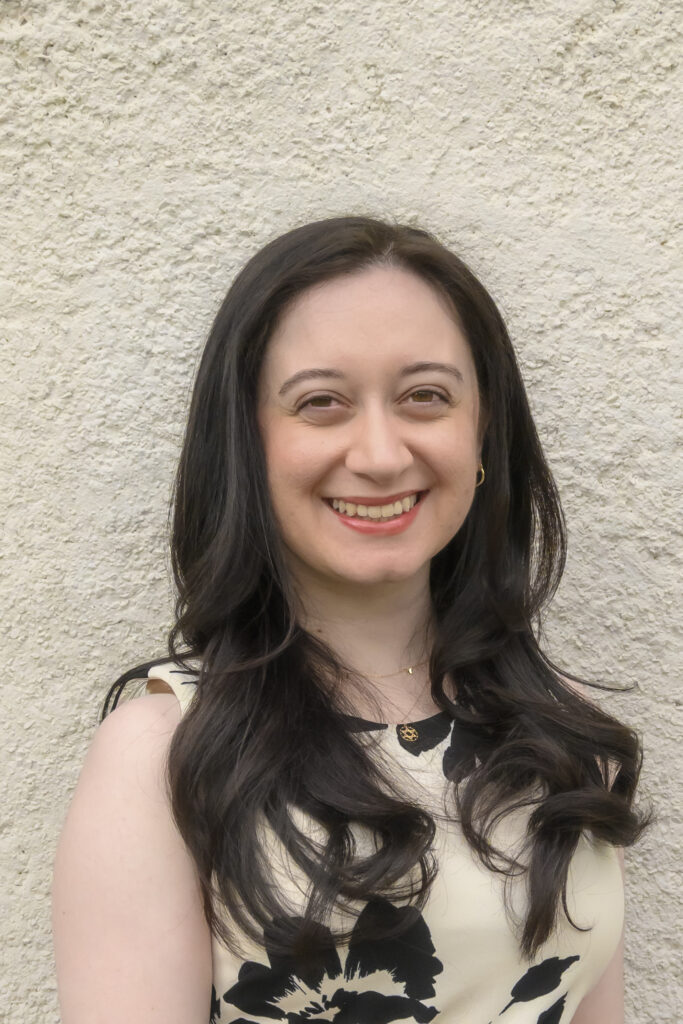
Ranata Shlobin
Rabbinic Intern